

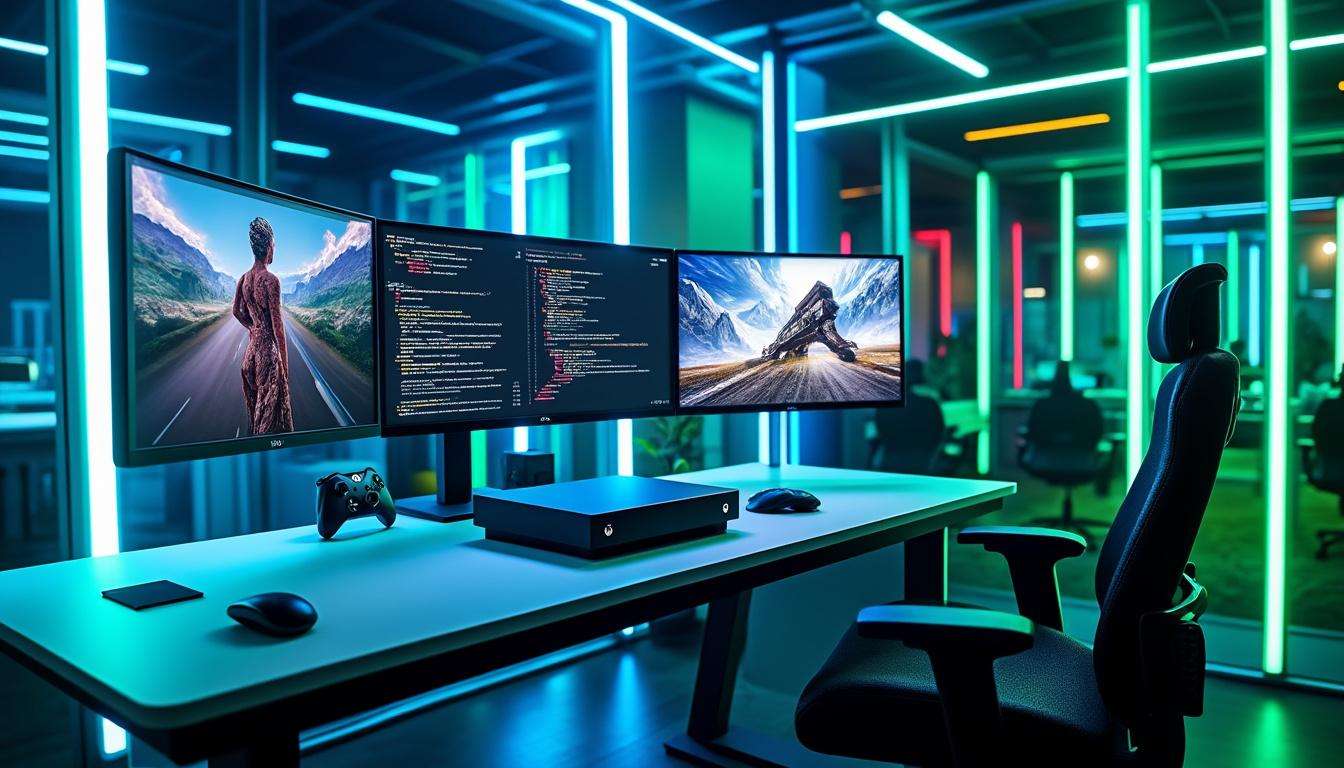
Microsoft unveiled clear steps for the next era of console play. GDC announcements put Next-Gen Gaming into a PC-friendly frame. Project Helix will run console titles, PC builds, and cloud streams from a single native base. Xbox teams announced a co-designed AMD SOC, upgraded ray tracing, and native support for new DirectX features. Developers received practical guidance from Chris Charla, who urged studios to prioritize current Xbox Series X work and Xbox on PC builds first. This route ensures a native port for Project Helix when alpha hardware reaches developers in 2027. Indie teams gain the biggest advantage from early Xbox integration. Microsoft will extend familiar backend tools, API help, marketing data, and business support into the next cycle. If you plan releases for Xbox Games and PC, start now. Your work will slot into a unified pipeline that reduces duplication and accelerates ship dates.
Preparing For Next-Gen Gaming With Xbox Development And Project Helix Tools
Project Helix reshapes Xbox Development into a Windows-like workflow. Microsoft moves packaging, testing, identity, and invite systems toward PC-style tools. This makes porting easier for teams used to PC pipelines. Developers who build for Xbox Series X and Xbox on PC will arrive at Project Helix with a native build already in hand. Microsoft promises support for Xbox APIs, backend integration, and shared marketing assets to smooth release work. For studios, the obvious path sits in the current Xbox ecosystem. Start with Xbox on PC when working from a Steam or stock PC base. Use that build as the foundation for the console version. Final insight, prepare once, ship across platforms with fewer reworks.
Xbox SDK And Game Programming Tips For Game Optimization And Performance
The new SDK will expose hardware features of the custom AMD SOC. Use the SDK to tune ray tracing hits and storage throughput. Optimize data streaming to reduce load stalls. Profile early on Xbox Series X and on PC builds. Prioritize fast storage pipelines and efficient shaders.
- Target Xbox on PC build first, then adapt to console specifics.
- Use native Xbox SDK hooks to improve load times and GPU utilization.
- Profile GPU and CPU across console and PC hardware to spot regressions early.
- Implement adaptive quality for ray tracing to preserve frame pacing under heavy scenes.
- Automate packaging and testing with Windows-style pipelines to reduce build drift.
Maya, an indie lead, switched her RPG workflow to Xbox on PC mid-development. She reduced debug cycles by 30 percent and shipped a performance patch faster than planned. Use the SDK to avoid late-stage surprises.
Console Gaming And PC Unity For Game Design And Distribution Strategies
Microsoft pushes convergence across devices. Xbox Play Anywhere and cloud streaming will extend reach to smart TVs and handheld PCs. Design choices must account for variable latency and input methods. Build modular systems that swap assets and quality levels at runtime. Use cloud features for asynchronous saves and cross-play matchmaking. For distribution, use unified packaging to deliver one SKU across console and PC. Players will expect parity across platforms. Your design must support flexible control maps and adaptive UI. A single build reduces QA load and simplifies live operations.
Indie Studios Workflow For Xbox Games To Reach Project Helix Native Build
Chris Charla advised studios to develop for current Xbox consoles and Xbox on PC first. This approach guarantees a native starting point for Project Helix. Indie teams should adopt Xbox SDK early and join Xbox Play Anywhere. Use existing Xbox backend tools for identity and invites. Streamline builds by standardizing on a single pipeline. Outsource heavy tooling only when necessary. Consider shared QA sessions with other teams to spot platform-specific issues sooner.
Maya applied this approach to her studio of six. Her team shipped two patches and preserved feature parity across platforms. The result, faster time to market and better user feedback loops. Final point, early Xbox integration reduces port costs later.
Practical Steps To Adopt Xbox Development For Your Next Title
Move from plan to action with focused tasks. Start with an Xbox on PC build. Integrate Xbox SDK features early. Profile and optimize while features mature. Use cloud services for saves and multiplayer stress tests. Document platform differences and automate test runs. Promote cross-play during internal QA. Build marketing assets using shared Xbox tools to avoid last-minute changes. These steps will produce a reliable pipeline ahead of Project Helix hardware availability.
- Set up Xbox on PC build as your primary development target.
- Integrate Xbox SDK calls during core systems work.
- Run nightly automated tests on console and PC.
- Profile I/O and GPU load before content lock.
- Use unified packaging for simultaneous deployment.
Apply these steps and your team will reduce duplication and shorten certification timelines.
Further reading on Microsoft strategy and ecosystem fits well with this approach. See an overview of Microsoft next generation plans here Microsoft next gen Xbox. For details on Windows and Xbox convergence, check this analysis Windows and Xbox gaming unified.
How should indies prioritize Xbox Development work
Prioritize Xbox on PC as the main development build. Integrate Xbox SDK early. Use the Xbox Series X for profiling before porting to Project Helix. This path reduces rework and yields a native build when new hardware arrives.
Will Project Helix require separate builds for console and PC
Microsoft intends a unified approach. Prepare one base build on Xbox on PC and then adapt console specifics. The SDK and backend tools will reduce the need for fully separate binaries.
What optimization areas matter most for Next-Gen Gaming
Focus on storage throughput, ray tracing scalability, and low latency networking. Profile GPU and CPU across both console and PC hardware. Automate tests to catch regressions early.
How does Xbox Play Anywhere affect distribution
Xbox Play Anywhere simplifies distribution by linking purchases across console and PC. Use unified packaging and shared marketing data to streamline launches and maximize reach.