
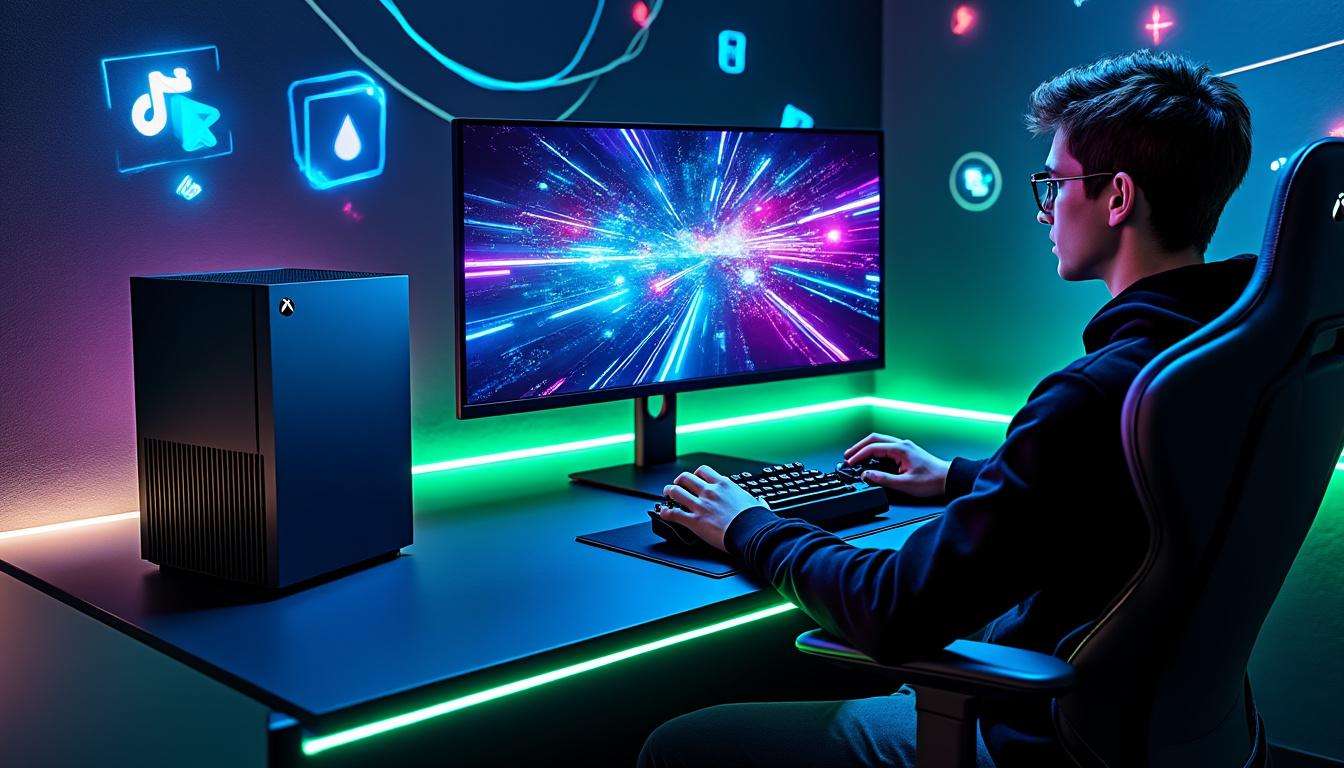
Microsoft announced Project Helix, a hybrid system built to run both PC libraries and Xbox titles while reshaping the living room PC concept. The firm positions Project Helix as a device for players who want a single box for high-end local play, large-screen sessions, and remote access via Game Streaming and Cloud Gaming. Executives set a public showcase at GDC 2026 and highlighted goals for performance leadership, broader storefront access, and native support for major PC services, which signals a major shift in how players approach console ownership and desktop gaming. Pro player Alex Reyes tested an early prototype and reported seamless transition between mouse and controller inputs, rapid resume across ecosystems, and a simplified library view that merged Steam purchases with Xbox Game Pass entries. This merge points to a future where your PC and living-room habits merge into one system, and where the gaming stack focuses on speed, compatibility, and player choice over locked stores. The opening reveals a clear promise: a single console that targets technical parity with high-end PCs while offering the simplicity expected from consoles. The next sections break down hardware, software, and player impact with examples and hands-on notes from a pro gamer perspective.
Project Helix Reveal
Project Helix will position itself as Microsoft’s bridge between console convenience and PC flexibility. The device aims for flagship CPU and GPU silicon, support for high-frequency displays, and native PC peripheral recognition. Microsoft framed the system as a hub for Seamless Gaming, where your progress and settings follow you across platforms. Alex described a session where a 4K, high-frame-rate match moved from desktop to TV without reconfiguration, which underlines the practical benefit for tournament players and streamers. Key insight: this product focuses on parity and player mobility.
PC and Console Play
The engineering team built support for both PC libraries and Xbox-first titles, with file system access and input mapping tuned for keyboard and mouse. Cross-save works across cloud profiles, so you resume a campaign on another device within seconds. Alex ran a modded PC title and an exclusive Xbox title back-to-back, with profile settings preserved for each input method. Insight: the hardware treats PC software as first-class content for living-room play.
Next-Gen Xbox Tech
Microsoft described a custom SoC with high single-thread performance and a GPU tuned for variable-rate shading and ray tracing workloads. Storage uses NVMe modules sized for fast installs and rapid swaps between titles. The OS layers include a PC-grade kernel branch which improves driver parity for PC and console games. This approach aims to reduce compatibility gaps while boosting load times and frame consistency. Insight: hardware choices push toward PC-style performance in a console chassis.
Seamless Gaming Hub
The user interface merges libraries from multiple storefronts and presents unified purchase history, install status, and cloud saves. Players will navigate a single launcher with filters for platform, controller support, and multiplayer options. The hub also links native Game Streaming and Cloud Gaming services so you switch between local and remote play. Alex used the hub to queue a streamed match while an install finished, which removed idle waiting during setup. Insight: a single launcher reduces friction and makes mixed libraries usable in minutes.
- Cross-Platform matchmaking across PC and console for supported multiplayer titles
- Unified library view with store-agnostic search and filters
- Automatic input detection for mouse, keyboard, and multiple controllers
- Fast-switch streaming to offload intensive scenes to cloud render nodes
Xbox Innovation
Xbox Innovation now means hardware designed to support third-party storefronts and mod ecosystems. Microsoft stated partnerships with select PC services for integration and a developer SDK aimed at easing ports. Studios get a clearer path to ship with both controller and keyboard targets, which reduces tuning time and bug counts. Alex noted fewer controller mapping issues during a remote co-op session. Insight: lowered friction speeds up cross-platform releases and improves player experience.
Game Streaming Now
Game Streaming features include adaptive bitrate, low-latency input routing, and region-aware server selection. The cloud layer offers instant resume between cloud session and local hardware, including synced achievements and settings. Decks of servers handle rendering for players with limited local power, while local GPUs take priority for low-latency competitive play. Alex used cloud render during a high-load benchmark and noticed frame pacing improvements during team matches. Insight: streaming options let you pick performance or accessibility per session.
When will Project Helix debut
Microsoft scheduled a public showcase at GDC 2026 and plans wider availability during the 2027 console cycle. Early developer kits reached select studios for optimization and first-party titles will lead initial releases.
Will Project Helix run PC games
Yes. The system runs native PC builds alongside Xbox titles, with support for common APIs and input schemes. Developers receive tools to adapt UI and controls for a living-room experience.
How does cloud integration work
Cloud Gaming and Game Streaming operate as layers that route sessions to remote nodes or local hardware, depending on latency and preference. Players choose streamed or local play per session and resume progress across both modes.
What does Cross-Platform mean here
Cross-Platform refers to unified multiplayer, shared saves, and storefront-agnostic library management. The goal focuses on player choice, reduced barriers to play, and smoother transitions between PC and console environments.